When a family member needs wound care at home, one common question is whether the dressing can be handled by a caregiver or whether a registered nurse is required.
The answer depends on the wound and the person’s overall health. A caregiver may assist with simple daily care after receiving proper instructions. However, wounds that are surgical, diabetic, infected, chronic, deep or slow to heal should be assessed and managed by a qualified healthcare professional.
Understanding the difference between a home nurse and a caregiver helps families choose safer and more appropriate support.
What Is the Main Difference Between a Home Nurse and a Caregiver?
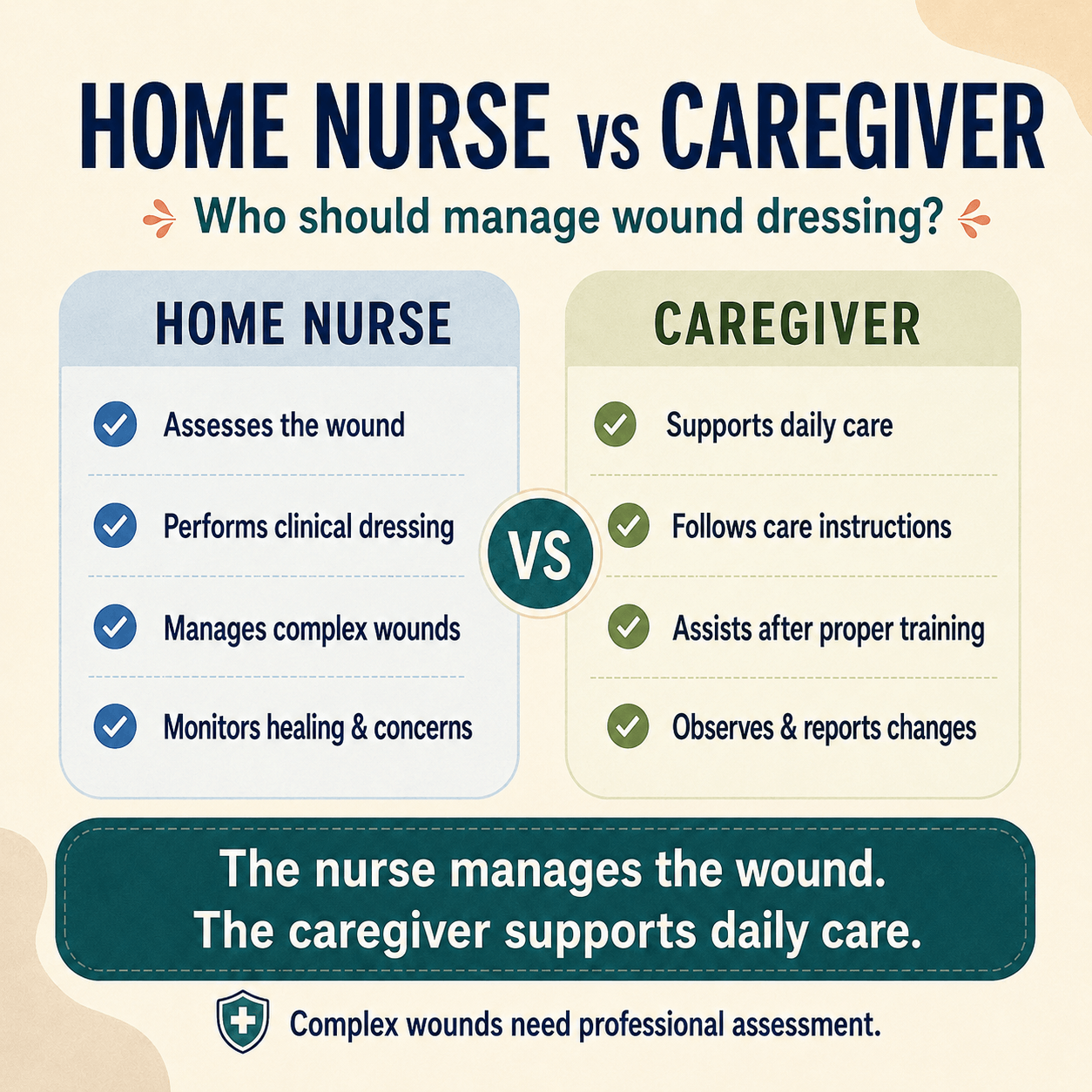
A home nurse is a qualified healthcare professional who provides clinical nursing care. A caregiver mainly assists with daily living and personal support.
| Home Nurse | Caregiver |
|---|---|
| Qualified nursing professional | Provides daily living support |
| Assesses the wound condition | Observes and reports changes |
| Performs clinical wound care | May assist with simple care after training |
| Monitors healing progress | Helps keep the patient comfortable |
| Recognises possible complications | Alerts the family or nurse when something changes |
| Follows a clinical care plan | Supports the established care plan |
| Escalates concerns to a doctor when necessary | Does not diagnose or independently treat complex wounds |
Both roles are valuable, but they are not interchangeable.
What Does a Home Nurse Do During Wound Dressing?
Home wound dressing involves more than removing an old dressing and applying a new one. The nurse must first understand the wound condition and follow an appropriate care plan.
During a wound care visit, a registered nurse may:
- Assess the wound’s size, depth and appearance
- Check the surrounding skin
- Observe the amount and type of wound drainage
- Look for possible signs of infection
- Clean the wound using an appropriate technique
- Apply dressing materials based on the existing care plan and wound condition
- Monitor changes between visits
- Document healing progress
- Explain what family members should monitor
- Recommend medical review when necessary
Different wounds may require different dressing materials and care approaches. Our guide to the different types of wound dressing explains why gauze, foam, hydrocolloid and other dressings are not suitable for every wound.
In Malaysia, nurses must be registered with the Nursing Board Malaysia, and an Annual Practising Certificate allows registered nurses to practise nursing. According to the Ministry of Health Malaysia Nursing Division, the registration and practising certificate system helps ensure nurses maintain the required competency to practise.
What Does a Caregiver Do?
A caregiver supports the patient’s comfort, hygiene, mobility and daily routine. Depending on the patient’s needs, a caregiver may help with:
- Bathing and personal hygiene
- Changing clothes and bedding
- Meal preparation
- Mobility and repositioning
- Medication reminders
- Toileting assistance
- Monitoring general changes in the patient
- Helping the patient avoid pressure on an affected area
- Informing the family or nurse when the wound dressing becomes wet, loose or dirty
A caregiver may also help with a simple dressing change if a qualified healthcare professional has assessed the wound, provided clear instructions and confirmed that it is appropriate.
However, the caregiver should not be expected to independently assess or treat a complex wound unless they have the necessary clinical qualification and are authorised to do so.
Can a Caregiver Change a Wound Dressing?
Sometimes, but not in every situation.
Minor cuts and grazes can often be managed at home with appropriate cleaning and protection. However, deeper wounds, signs of infection and wounds that do not heal normally require medical attention.
A caregiver may assist when:
- The wound is minor and stable
- A nurse or doctor has already assessed it
- There is a clear written care plan
- The caregiver has received proper instructions
- The dressing procedure is simple
- The wound is healing without concerning changes
- Professional follow-up remains available
Even then, the caregiver should know what changes must be reported.
A registered nurse should be involved if the wound becomes larger, increasingly painful, produces unusual discharge or stops improving.
Which Wounds Should Be Managed by a Home Nurse?
Professional wound care is especially important when the wound is more complicated or the patient has a higher risk of delayed healing.
Surgical Wounds
After surgery, the incision must be monitored for reopening, unusual drainage and possible infection. Some patients may also need professional dressing changes after hospital discharge.
Diabetic Foot Wounds
Diabetes may affect circulation, sensation and healing. A patient may not feel worsening pain even when the wound is becoming more serious. Diabetic foot wounds should not be treated as ordinary cuts.
Pressure Sores and Bedsores
Pressure injuries commonly affect bedridden or mobility-limited patients. Proper care may involve wound dressing, skin monitoring, repositioning and pressure relief.
Chronic or Non-Healing Wounds
A wound that remains open or shows little improvement needs professional assessment. The underlying cause may need to be addressed before healing can progress.
Infected or Possibly Infected Wounds
Increasing redness, warmth, swelling, pain, discharge or an unpleasant smell may indicate a problem. Fever or feeling generally unwell also requires prompt medical attention.
Skin Tears in Elderly Patients
Older adults may have thin and fragile skin. Removing an unsuitable dressing can cause further injury, so gentle handling and appropriate materials are important.
Wounds Producing Heavy Drainage
A heavily leaking wound may require closer monitoring and a dressing that can manage moisture while protecting the surrounding skin.
Signs That a Wound Needs Professional Attention
Families should not wait for a wound to become severe before seeking help.
Arrange professional assessment if you notice:
- Redness spreading around the wound
- Increasing warmth or swelling
- New or worsening pain
- Pus or unusual discharge
- An unpleasant smell
- Bleeding that is difficult to control
- Dark or black tissue
- Wound edges starting to separate
- No visible improvement
- Fever or feeling unwell
Official NHS guidance also identifies increasing redness, heat, swelling, pain and wound leakage as possible signs of infection. Families can understand these warning signs in more detail through our guide on how to recognise an infected wound.
Seek urgent medical care for severe bleeding, rapidly spreading redness, severe pain, confusion, breathing difficulty or other serious symptoms. Home wound dressing is not a replacement for emergency treatment.
Why Professional Assessment Matters
Two wounds may look similar but require different approaches.
A wound dressing decision may depend on:
- The cause of the wound
- Wound depth and size
- Amount of drainage
- Condition of the surrounding skin
- Signs of infection
- Blood circulation
- Diabetes or other underlying conditions
- The patient’s mobility
- Existing instructions from the doctor
- How the wound has changed since the previous visit
Without a proper assessment, using the wrong dressing or technique may irritate the surrounding skin, trap excessive moisture or fail to manage drainage properly.
This is why professional wound care is not simply about changing a bandage. It also involves assessment, monitoring and knowing when further medical review is needed.
Can a Home Nurse and Caregiver Work Together?
Yes. In many cases, the safest approach is for the home nurse and caregiver to support the patient together.
The nurse can:
- Assess and manage the wound
- Establish or follow the wound care plan
- Perform professional dressing changes
- Monitor healing progress
- Educate the caregiver and family
- Identify when medical escalation is needed
The caregiver can:
- Support the patient between nursing visits
- Keep the surrounding area clean
- Help with mobility and repositioning
- Observe whether the dressing becomes wet or loose
- Remind the patient to follow medical advice
- Report changes to the nurse or family
This arrangement provides professional clinical oversight while ensuring the patient receives consistent daily support.
How to Choose the Right Person for Wound Care
Before arranging wound dressing at home, families should ask:
Is the person a registered nurse?
Ask about the nurse’s qualification and practising status, especially for clinical procedures.
Does the nurse have relevant wound care experience?
Not every nurse has the same experience with diabetic wounds, pressure injuries, surgical wounds or chronic wounds.
Will the wound be assessed before dressing?
Professional care should consider the wound’s current condition rather than using the same dressing for every patient.
Will the healing progress be monitored?
Regular documentation helps the family and clinical team understand whether the wound is improving.
What happens if the wound becomes worse?
There should be a clear process for contacting a doctor, clinic or hospital when the wound requires further medical attention.
Will the family receive guidance?
Family members and caregivers should understand how to protect the dressing and which warning signs to monitor between visits.
When Is Home Wound Care a Better Choice?
Home wound care may be suitable for patients who:
- Have difficulty walking or travelling
- Are elderly, weak or bedridden
- Need regular dressing changes
- Are recovering after surgery
- Have a diabetic, chronic or pressure-related wound
- Find repeated hospital or clinic visits physically exhausting
- Need wound monitoring after hospital discharge
Receiving wound care at home may reduce the strain of transportation and long waiting times. Our comparison of home wound care and clinic visits can help families decide which option is more suitable.
Professional Home Wound Dressing by Registered Nurses
Backliners provides professional wound assessment, cleaning and dressing in the comfort of the patient’s home. Our registered nurses support patients with surgical wounds, diabetic wounds, pressure sores, chronic wounds, skin tears and other conditions that require ongoing care.
Home visits are available across:
- Penang and Jawi
- Kuala Lumpur
- Selangor
- Klang
- Shah Alam
Families looking for professional home nursing and wound care services can contact Backliners to discuss the wound condition, patient’s location and required support.
Frequently Asked Questions (FAQs)
No. A caregiver mainly assists with daily living and personal support. A home nurse is a qualified healthcare professional who can provide clinical nursing care, including appropriate wound assessment and dressing within their professional scope.
A caregiver should only assist if a doctor or nurse has assessed the wound and provided clear instructions. Surgical wounds that are opening, leaking, increasingly painful or showing possible signs of infection require professional attention.
No. Minor cuts and grazes can often be managed with basic first aid. However, surgical, diabetic, chronic, infected, deep or non-healing wounds should be assessed by a qualified healthcare professional.
The frequency depends on the wound condition, drainage, dressing material and care plan. Some wounds require frequent dressing changes, while others may use dressings designed to remain in place longer.
A nurse can assess the wound, provide appropriate nursing care and identify concerns. However, suspected infection may require evaluation and treatment by a doctor. Antibiotics should only be prescribed by an authorised medical practitioner.
Prepare the patient’s discharge notes, current medication list, doctor’s instructions and any information about previous dressing materials. The nursing team may also ask about the wound condition and patient’s location before confirming the visit.
Get the Right Wound Care Support at Home
Caregivers play an important role in a patient’s comfort and daily routine, but complex wound dressing requires professional assessment and clinical judgement.
If your family member has a surgical wound, diabetic wound, bedsore or wound that is not healing normally, contact Backliners to arrange professional wound care at home.
Disclaimer Statement:
We hope you find this article helpful and informative. The content provided is intended for general informational purposes only and should not be considered medical advice, diagnosis, or treatment. For specific medical concerns, including wound care needs, always consult a qualified healthcare professional. Backliners specializes in expert wound care services and is dedicated to providing personalized care to support your health and recovery in the comfort of your home.