Diabetes is one of the most common chronic health conditions in Malaysia. According to the National Health and Morbidity Survey (NHMS) 2023, 15.6% of Malaysian adults are living with diabetes, while another 5.9% have elevated blood sugar levels without a previous diagnosis.
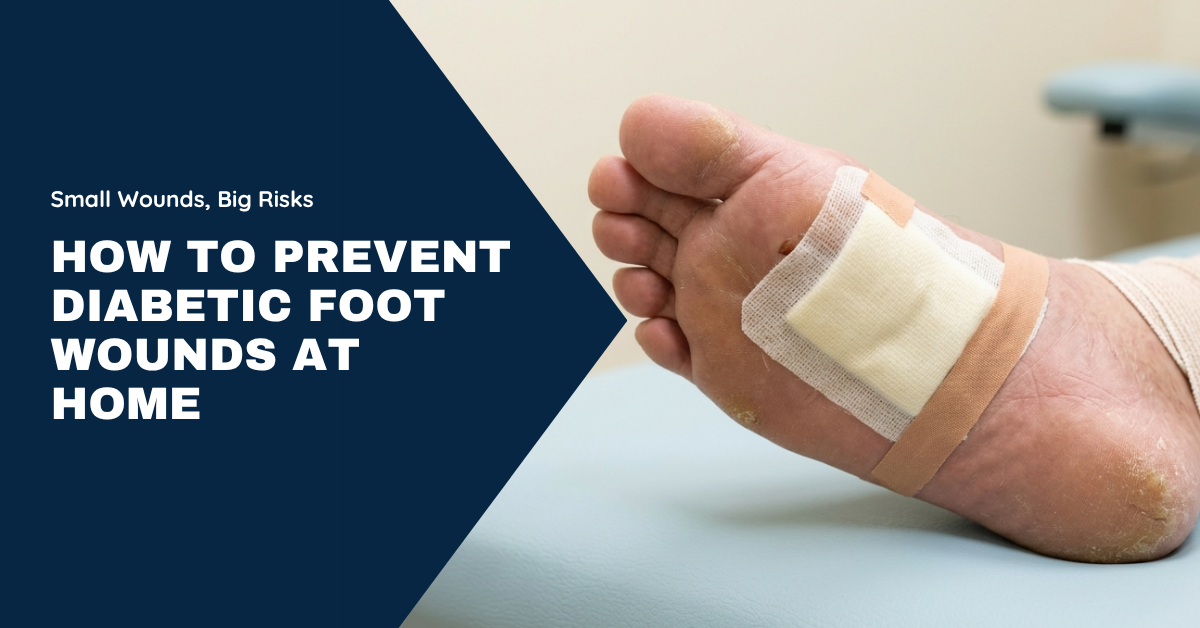
While many people understand the importance of controlling blood glucose levels, diabetic foot problems are often overlooked. A small cut, blister, or cracked skin may become a more serious wound when nerve sensation and healing ability are affected by diabetes.
Many diabetic foot wounds can be prevented through daily foot care, suitable footwear, good blood sugar management, and early attention to any changes. For patients who already have a foot wound, professional wound care support such as home wound dressing service in Kuala Lumpur may help them receive proper wound management without frequent clinic visits.
This guide explains why diabetic foot wounds happen, how to prevent them, what to do when an injury occurs, and when professional wound care may be needed.
Why Does Diabetes Increase the Risk of Foot Wounds?
Diabetic foot wounds usually develop because diabetes affects three important areas:
- Nerve function
- Blood circulation
- The ability of the body to repair damaged tissue
Understanding these risks allows patients and caregivers to take preventive action earlier.
1. Reduced Sensation Due to Nerve Damage
Long-term high blood sugar levels can damage nerves, especially those in the feet. This condition is known as diabetic neuropathy.
When nerve sensation decreases, patients may not notice:
- Small cuts
- Blisters
- Pressure from tight footwear
- Minor injuries caused by walking barefoot
A wound that would normally cause pain or discomfort may continue developing without the person realising it.
This is why daily foot checks are important for diabetic patients.
2. Slower Healing Due to Poor Circulation
Diabetes can also affect blood vessels and reduce circulation to the feet.
Good blood circulation is important because blood delivers:
- Oxygen
- Nutrients
- Immune cells
that support wound healing.
When circulation is reduced, wounds may take longer to recover and have a higher risk of infection. Learn more about why diabetic wounds heal slowly and the factors that affect recovery.
3. Repeated Pressure and Friction
The feet carry the body’s weight every day, making them vulnerable to pressure and friction.
Common causes include:
- Poorly fitting shoes
- Walking barefoot
- Repeated rubbing
- Pressure on the heel or sole
For diabetic patients, repeated small injuries can eventually become serious wounds.
Who Is More at Risk of Developing Diabetic Foot Wounds?
Although every person with diabetes should practise good foot care, some individuals have a higher risk of developing foot complications.
Higher-risk groups include people who:
- Have had diabetes for many years
- Have numbness or reduced sensation in their feet
- Have poor circulation
- Have previously experienced a diabetic foot ulcer
- Smoke
- Have kidney disease related to diabetes
- Have foot deformities
- Wear unsuitable footwear
- Have difficulty checking their feet independently
If you fall into a higher-risk category, regular foot assessments and early attention to any changes become even more important.
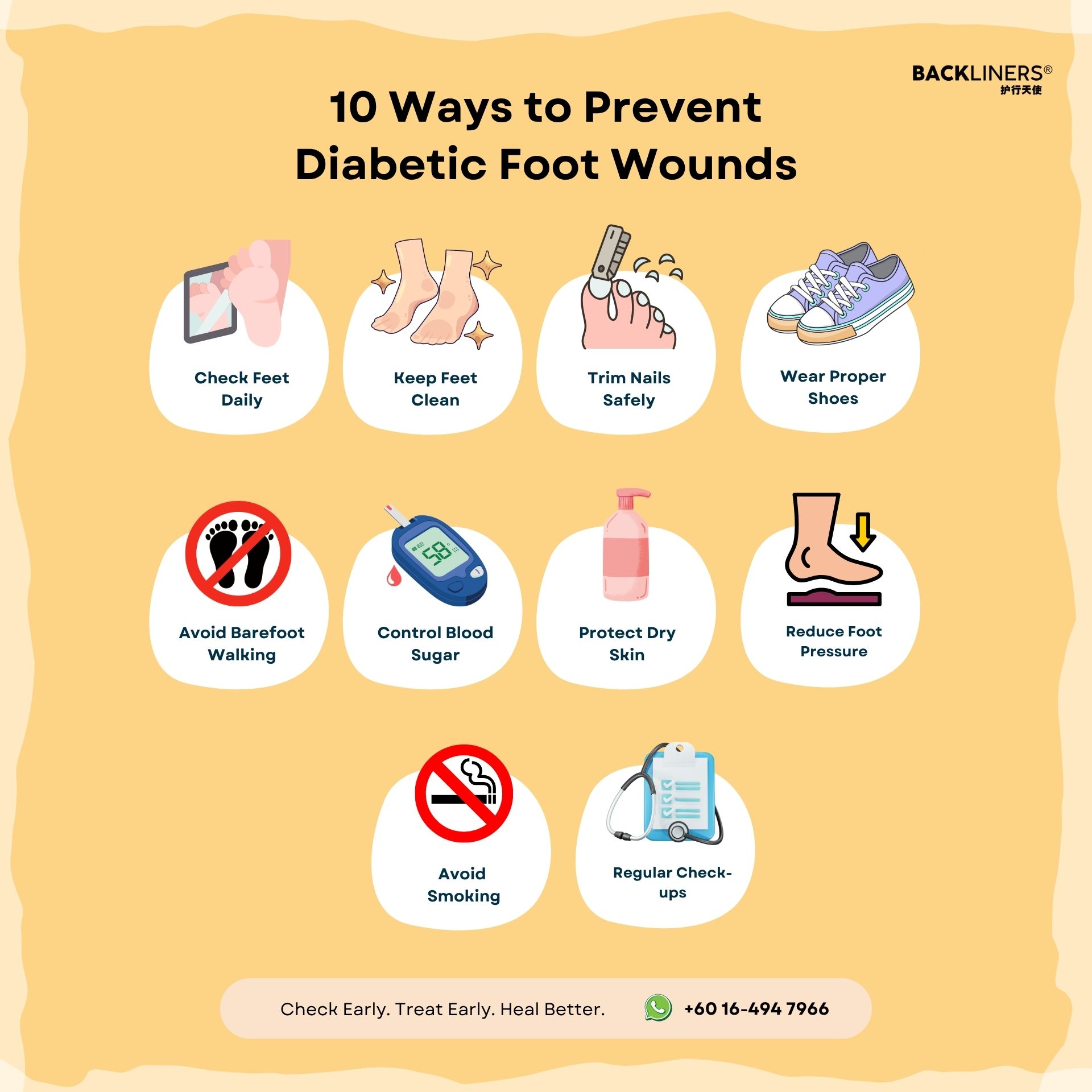
10 Daily Habits That Help Prevent Diabetic Foot Wounds
Preventing diabetic foot wounds does not require complicated equipment or advanced medical knowledge. The most effective prevention strategies are simple daily habits performed consistently.
For people with diabetes, foot care should become part of the daily routine, just like taking medication or monitoring blood sugar levels.
The goal is simple:
Find problems early, protect the skin, and reduce pressure or injury before a small issue becomes a serious wound.
1. Check Your Feet Every Day
Daily foot inspection is one of the most important prevention steps.
Look for:
- Cuts or scratches
- Blisters
- Redness
- Swelling
- Cracked skin
- Changes in colour
- Signs of infection
Pay special attention to:
- Between the toes
- The bottom of your feet
- Around your heels
If you have difficulty checking your feet, ask a family member for assistance or use a mirror.
Finding a problem early allows you to manage it before it becomes more serious.
2. Keep Your Feet Clean and Dry
Wash your feet daily using mild soap and lukewarm water.
Avoid very hot water because reduced sensation may make it difficult to judge temperature accurately.
After washing:
- Dry your feet carefully
- Pay attention to the spaces between your toes
- Apply moisturiser to dry areas such as heels
Avoid applying moisturiser between your toes because excess moisture can increase the risk of skin problems.
3. Trim Your Toenails Carefully
Incorrect nail trimming can cause small injuries.
Tips:
- Cut nails straight across
- Avoid cutting too short
- Do not cut into the corners
If your nails are thick, damaged, or difficult to trim, consider seeking professional advice rather than risking accidental injury.
4. Wear Suitable Footwear
Proper footwear helps protect your feet from pressure and friction.
Choose shoes that:
- Fit comfortably
- Provide enough space for your toes
- Do not rub against your skin
- Offer proper support
Before wearing shoes, check inside for:
- Small objects
- Rough areas
- Loose stitching
5. Avoid Walking Barefoot
Walking barefoot increases the risk of unnoticed injuries.
Even inside the home, you may accidentally step on:
- Sharp objects
- Rough surfaces
- Small items
Wear suitable footwear whenever possible.
6. Manage Blood Sugar Levels
Good blood sugar control supports overall health and wound healing.
Follow your healthcare provider’s advice regarding:
- Medication
- Diet
- Exercise
- Blood glucose monitoring
7. Protect Dry and Cracked Skin
Dry, cracked skin can create openings where bacteria may enter.
Use moisturiser regularly on dry areas, especially:
- Heels
- Soles
Avoid applying products directly onto open wounds unless advised by a healthcare professional.
8. Reduce Pressure on Your Feet
If you already have foot problems, reducing pressure is important.
Avoid activities that place unnecessary stress on the affected area and follow professional advice about suitable footwear or protection.
9. Avoid Smoking
Smoking can affect circulation and may slow down the body’s ability to heal.
Quitting smoking can support better circulation and overall health.
10. Attend Regular Health Checks
Regular medical follow-up helps identify problems early.
Your healthcare provider can assess:
- Foot sensation
- Circulation
- Diabetes control
- Existing foot problems
What To Do If You Discover a Foot Injury
Even with good prevention habits, minor injuries can happen.
For diabetic patients, it is important not to ignore small wounds.
Step 1: Clean the Area Gently
If you notice a minor cut or scratch:
- Wash your hands before touching the wound
- Clean the area gently with clean water or saline solution
- Avoid aggressive rubbing or scrubbing
- Dry the surrounding skin carefully
Avoid using unverified home remedies or applying substances that may irritate the wound. Following the correct wound care steps can help protect healthy tissue and create a better environment for healing.
Step 2: Protect the Wound
A suitable dressing helps protect the wound from external contamination and creates an appropriate environment for healing.
Depending on the wound condition, dressing selection may vary.
A healthcare professional may consider factors such as:
- Wound size
- Depth
- Amount of wound fluid
- Presence of infection
- Condition of surrounding skin
Avoid changing or applying specialised dressings without proper guidance, especially for deeper or infected wounds.
Step 3: Monitor Changes
Check the wound regularly and look for signs that it may be getting worse.
Seek professional advice if you notice:
- Increasing redness
- Swelling
- Warmth around the wound
- Pus or unusual discharge
- Bad smell
- Increasing wound size
- Dark or black tissue
- Fever or feeling unwell
For people with diabetes, early assessment is important because infections can progress quickly.
Do not wait for a diabetic foot wound to worsen. If you need professional support, contact Backliners for home wound dressing service. Our registered nurses provide wound care support across Penang, Kuala Lumpur, Selangor, and nearby areas.
When Should Diabetic Patients Seek Professional Wound Care?
Not every small injury requires professional treatment. However, diabetic patients should seek help when a wound:
- Does not show improvement
- Becomes larger
- Shows signs of infection
- Is deep or difficult to manage
- Occurs in someone with poor circulation or reduced sensation
Early assessment can help prevent a minor problem from becoming a more serious complication.
How Home Wound Dressing Helps Diabetic Patients in Kuala Lumpur
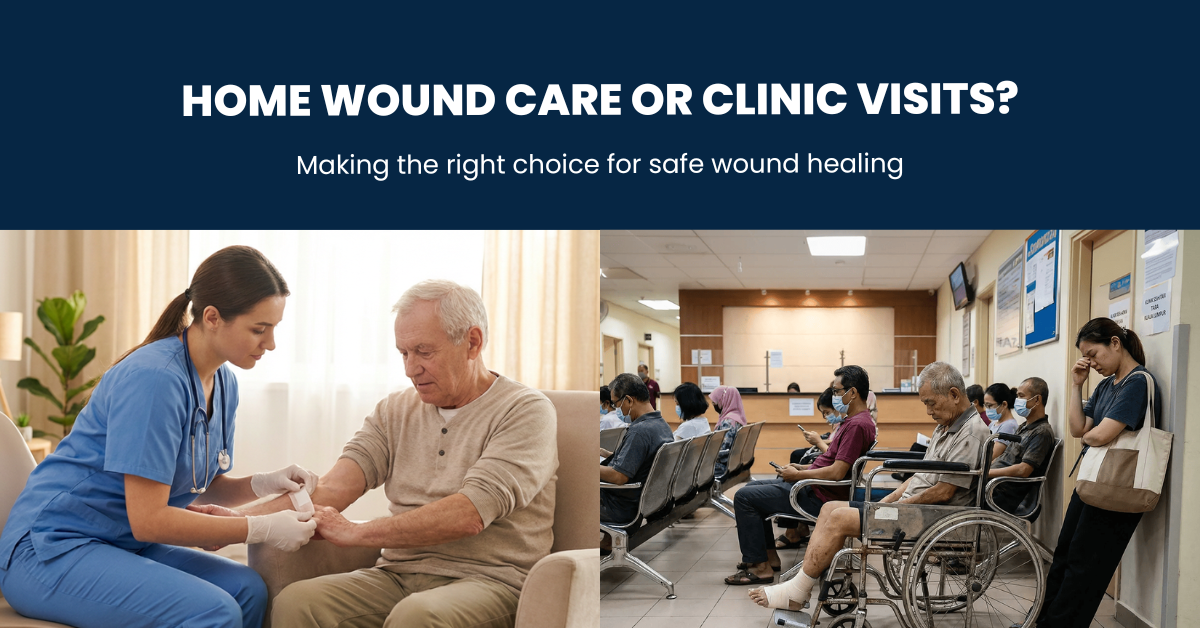
For elderly patients, bedridden individuals, or people with mobility difficulties, travelling to a clinic regularly for wound dressing can be challenging.
Common difficulties include:
- Traffic congestion
- Parking problems
- Long waiting times
- Physical strain during transportation
A home wound dressing service in KL allows patients to receive professional wound care without leaving home.
Backliners provides home wound dressing by registered nurses who assist with:
- Wound assessment
- Cleaning and dressing changes
- Monitoring healing progress
- Family guidance on wound care
What Happens During a Home Wound Dressing Visit?
Step 1: Contact Backliners
Share the patient’s wound condition and location so our team can arrange a suitable visit.
Step 2: Nurse Visits Your Home
A registered nurse arrives with the required wound care supplies.
Step 3: Wound Assessment
The nurse evaluates the wound condition and recommends appropriate care.
Step 4: Cleaning and Dressing
The wound is cleaned and dressed using suitable wound care methods.
Step 5: Aftercare Guidance
Families receive advice on monitoring the wound between visits.
Supporting Diabetic Wound Healing Through Nutrition and Lifestyle
Proper wound care works together with healthy daily habits.
Important areas include:
Maintain Balanced Nutrition
The body needs sufficient nutrients to repair damaged tissue and support wound recovery.
A balanced diet should include:
- Protein sources such as fish, chicken, eggs, tofu, and beans
- Fruits and vegetables rich in vitamins and minerals
- Adequate fluid intake
Proper nutrition is an important part of wound recovery, and understanding how nutrition helps wound healing can help patients make better dietary choices during the healing process.
Maintain Blood Sugar Control
Stable blood sugar levels support the body’s healing process and may reduce the risk of wound complications.
Patients should follow their healthcare provider’s advice regarding:
- Medication management
- Blood glucose monitoring
- Diet and lifestyle habits
- Regular health checks
Follow Wound Protection Advice
Protecting the wound is essential during the healing process.
Patients should:
- Avoid unnecessary pressure on the affected area
- Follow recommended wound care instructions
- Keep the wound clean and protected
- Attend follow-up assessments when needed
For diabetic patients, combining professional wound care with healthy lifestyle habits can help create better conditions for recovery.
Common Mistakes That Can Delay Healing
Avoid these common mistakes:
Ignoring Small Wounds
A small cut can become serious if it is not monitored.
Applying Unverified Home Remedies
Some substances may irritate wounds or increase contamination risk.
Delaying Professional Assessment
Waiting too long can allow infections to worsen.
Using the Wrong Dressing Method
Different wounds require different care approaches.
Why Choose Backliners for Diabetic Wound Care in Kuala Lumpur?
Backliners provides professional home wound care in Kuala Lumpur for patients who require wound monitoring and dressing support.
Our services include:
- Registered nurse home visits
- Care for diabetic wounds, surgical wounds, bedsores, and chronic wounds
- Professional wound dressing support
- Guidance for family caregivers
We help patients receive safer wound care in a more comfortable home environment.
Final Thoughts
Diabetic foot wounds can become serious, but proper daily care and early attention can reduce the risk of complications.
The most important steps are:
- Check your feet daily
- Protect your feet from injury
- Maintain healthy lifestyle habits
- Do not ignore slow-healing wounds
- Seek professional support when needed
For families in Kuala Lumpur managing diabetic wounds, timely wound care can make the recovery process safer and more manageable.
Frequently Asked Questions
Signs of infection may include increasing redness, swelling, warmth, pus, bad smell, or the wound becoming larger instead of healing. Diabetic patients may not always feel pain due to nerve damage, so regular wound checks are important.
Minor wounds can be managed with proper cleaning, dressing, and monitoring. However, diabetic wounds can become serious quickly. If the wound is not improving or shows signs of infection, professional wound care is recommended.
The dressing frequency depends on the wound condition, size, drainage, and healing progress. Some wounds may need dressing every few days, while others require more frequent care.
Check your feet daily, keep them clean and dry, wear suitable footwear, avoid walking barefoot, and maintain good blood sugar control. Early detection can help prevent serious complications.
Yes. Home wound dressing allows registered nurses to assess the wound, clean and dress it properly, and monitor healing progress without requiring the patient to travel.
Home wound care is especially helpful for elderly, bedridden, or mobility-limited patients who find travelling difficult. Nurses can provide professional wound care in the comfort of their home.
Yes. Backliners provides home wound dressing in KL for diabetic wounds, surgical wounds, bedsores, chronic wounds, and other wound care needs by registered nurses.
Seek professional help if the wound is getting worse, not healing, showing signs of infection, or if you are unsure how to manage the dressing properly.
Disclaimer Statement:
We hope you find this article helpful and informative. The content provided is intended for general informational purposes only and should not be considered medical advice, diagnosis, or treatment. For specific medical concerns, including wound care needs, always consult a qualified healthcare professional. Backliners specializes in expert wound care services and is dedicated to providing personalized care to support your health and recovery in the comfort of your home.