
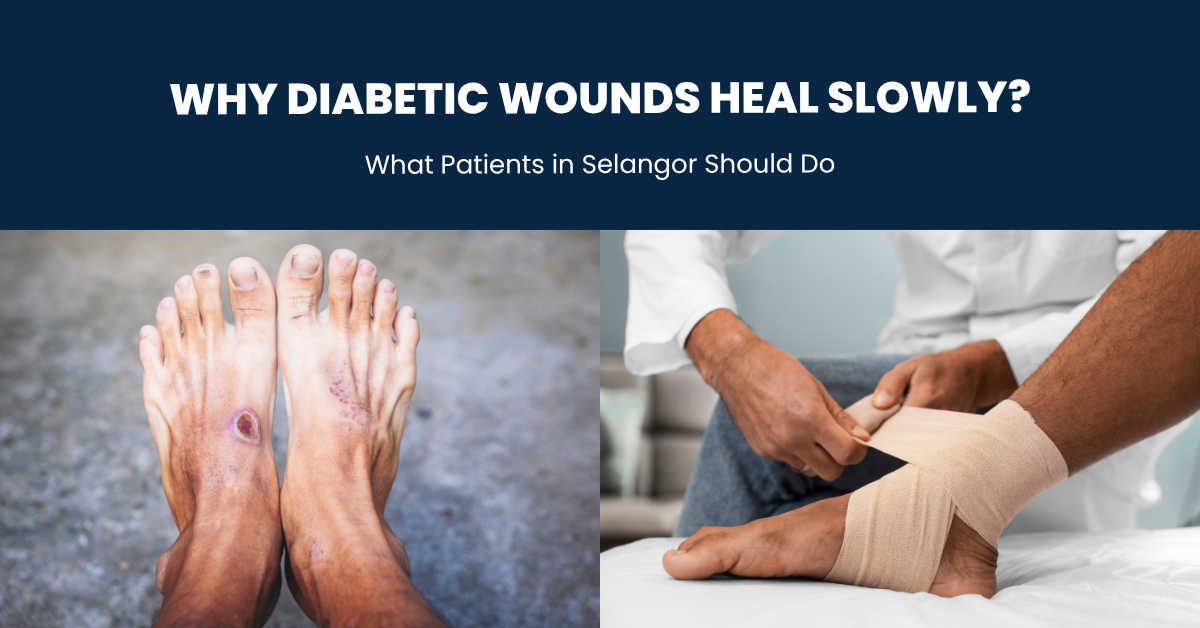
Diabetic wounds are known to heal much slower than normal cuts or injuries, and this can be worrying for many patients. For individuals living in Selangor, understanding why this happens and what steps to take can make a big difference in preventing complications and supporting faster recovery.
With the right awareness and proper wound care, most diabetic wound issues can be managed effectively at home or with professional support when needed.
Why Diabetic Wounds Heal Slowly
There are several key reasons why wounds in diabetic patients take longer to heal compared to non-diabetic individuals.
1. Poor Blood Circulation
High blood sugar levels can damage blood vessels over time. This reduces blood flow, especially to the feet and lower limbs. Since blood carries oxygen and nutrients needed for healing, reduced circulation slows down the recovery process.
2. Nerve Damage (Neuropathy)
Diabetes can cause nerve damage, which means patients may not feel pain from small cuts or blisters. As a result, minor injuries often go unnoticed and worsen before treatment begins.
3. Weakened Immune Response
High glucose levels can weaken the immune system, making it harder for the body to fight infections. This increases the risk of wound complications.
4. Higher Risk of Infection
Because bacteria can grow more easily in high-sugar environments, diabetic wounds are more prone to infection. Once infected, healing becomes even slower and more complicated.
Early Signs You Should Not Ignore
Patients in Selangor should be aware of early warning signs that indicate a wound is not healing properly:
- Redness or swelling around the wound
- Persistent pain or discomfort
- Unusual discharge or pus
- Slow or no visible healing progress
- Foul smell from the wound
If any of these symptoms appear, early action is important to prevent further complications.
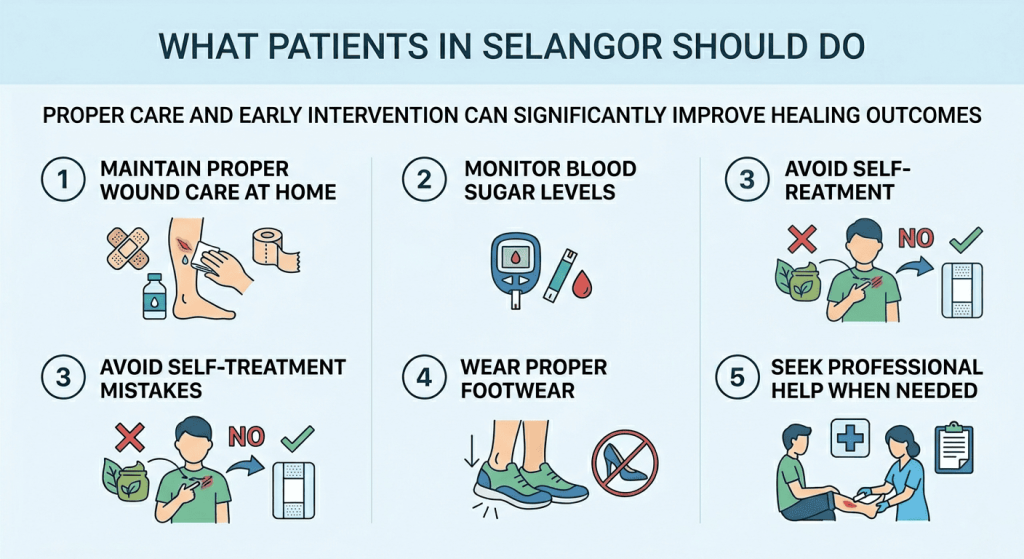
What Patients in Selangor Should Do
Proper care and early intervention can significantly improve healing outcomes.
1. Maintain Proper Wound Care at Home
Stable blood sugar levels play a major role in wound healing. Keeping glucose levels under control helps improve circulation and supports the body’s natural healing process.
2. Monitor Blood Sugar Levels
Stable blood sugar levels play a major role in wound healing. Keeping glucose levels under control helps improve circulation and supports the body’s natural healing process.
3. Avoid Self-Treatment Mistakes
Many patients unknowingly delay healing by using unverified home remedies or ignoring small wounds. Avoid applying harsh substances or delaying proper treatment.
4. Wear Proper Footwear
Ill-fitting shoes can worsen foot wounds or create new injuries. Always wear comfortable footwear that reduces pressure and friction.
5. Seek Professional Help When Needed
If a wound is not improving or shows signs of infection, it is important to seek professional wound care. In Selangor, patients can access wound care services that provide proper wound dressing, infection control, and regular monitoring to ensure safe recovery.
Benefits of Home Wound Care in Selangor
For many diabetic patients, receiving treatment at home is more convenient and safer, especially for those with mobility issues.
Professional home wound care Selangor services offer:
- Proper wound assessment and cleaning
- Sterile wound dressing techniques
- Infection prevention and monitoring
- Personalised care based on wound condition
- Reduced need for hospital visits
This helps patients recover in a comfortable environment while still receiving proper medical attention.
Home Care vs Professional Wound Care
Managing diabetic wounds at home can be suitable for very minor cases, but it is important to understand when professional care is needed. Knowing the difference helps prevent complications and ensures proper healing.
Home Wound Care
- Suitable for small, minor wounds
- Focuses on basic cleaning and dressing
- Requires careful daily monitoring
- May not be enough for infected or slow-healing wounds
Professional Wound Care
- Suitable for moderate to severe wounds
- Includes proper wound assessment and sterile dressing
- Helps prevent infection and complications
- Provides regular monitoring and treatment adjustments
- Recommended for diabetic patients with slow healing wounds
For patients in Selangor, accessing home wound care in Selangor services ensures proper treatment without needing frequent hospital visits, making recovery more convenient and safer.
Preventing Future Diabetic Wounds
Prevention is always better than treatment. Patients can reduce the risk of future wounds by:
- Checking feet daily for cuts or blisters
- Keeping feet clean and dry
- Maintaining a healthy diet
- Controlling blood sugar levels
- Scheduling regular health check-ups
These habits play an important role in long-term diabetic foot health.
Why Choose Professional Wound Care Support in Selangor
Managing diabetic wounds requires more than basic home care. Having the right support ensures wounds are treated properly, monitored closely, and given the best chance to heal without complications.
- Specialised Diabetic Wound Care – Focused management for slow-healing and high-risk wounds
- Home Wound Care Convenience – Get treatment at home in Selangor without unnecessary travel
- Proper Wound Dressing Techniques – Safe and hygienic care to reduce infection risk
- Close Healing Monitoring – Regular checks to ensure the wound is improving
- Early Complication Prevention – Quick action to prevent wounds from worsening
If needed, patients can access home wound care Selangor services for professional assistance and better recovery outcomes.
Summary Table: Why Diabetic Wounds Heal Slowly
| Factor | What Happens in the Body | Impact on Wound Healing |
|---|---|---|
| Poor Blood Circulation | High blood sugar damages blood vessels, reducing blood flow to feet and limbs | Less oxygen and nutrients reach the wound, slowing healing |
| Nerve Damage (Neuropathy) | Loss of sensation in feet due to nerve damage | Small cuts or blisters go unnoticed and worsen over time |
| Weakened Immune Response | High glucose weakens the immune system | Body struggles to fight infection and repair tissue |
| Higher Risk of Infection | Bacteria grow more easily in high-sugar conditions | Wounds become infected more easily and heal slower |
Final Thoughts
Diabetic wounds heal slowly due to poor circulation, nerve damage, and a higher risk of infection. However, with proper daily care and attention, most complications can be prevented or managed effectively.
For patients in Selangor, early action is important. If a wound is not improving, seeking professional wound care support can help ensure safer healing and prevent further complications.
Frequently Asked Questions
A diabetic wound may not be healing properly if you notice increasing redness, swelling, pus, persistent pain, foul smell, or no visible improvement after a few days. These are early signs that the wound needs professional attention.
Diabetic wounds heal slowly due to poor blood circulation, nerve damage, and a weakened immune system caused by high blood sugar levels. This makes it harder for the body to repair damaged skin and fight infections.
Yes, minor diabetic wounds can be managed at home with proper cleaning and dressing. However, if the wound shows signs of infection or does not improve, it is important to seek professional home wound care Selangor services.
Avoid using harsh antiseptics, ignoring small cuts, wearing tight shoes, or delaying treatment. These actions can slow healing and increase the risk of infection.
You should see a wound care specialist if the wound is getting worse, not healing, or showing signs of infection. Early treatment helps prevent complications and supports faster recovery.
Disclaimer Statement:
We hope you find this article helpful and informative. The content provided is intended for general informational purposes only and should not be considered medical advice, diagnosis, or treatment. For specific medical concerns, including wound care needs, always consult a qualified healthcare professional. Backliners specializes in expert wound care services and is dedicated to providing personalized care to support your health and recovery in the comfort of your home.