When you have a cut, surgical wound, diabetic foot ulcer, or pressure injury, well-meaning advice often comes from family members, friends, or social media. While some tips may sound convincing, not all of them are supported by modern wound care practices.
At Backliners, our registered nurses regularly provide home wound dressing services for patients recovering from surgery, managing diabetic wounds, pressure injuries, and other acute or chronic wounds. One thing we have noticed is that many delayed-healing wounds are linked to common misconceptions rather than the wound itself.
Proper wound care is more than simply applying a dressing. Understanding how wounds heal and recognising early signs of complications can make a significant difference to recovery.
According to Malaysia’s National Health and Morbidity Survey (NHMS) 2023, 15.6% of Malaysian adults are living with diabetes. Diabetes can affect circulation and nerve function, making wounds more difficult to heal and increasing the risk of complications. Studies in Malaysia have also reported diabetic foot ulcer prevalence ranging from approximately 5% to as high as 42% in certain hospital-based settings, depending on the patient population studied. Early assessment and appropriate wound care are therefore especially important for diabetic patients.
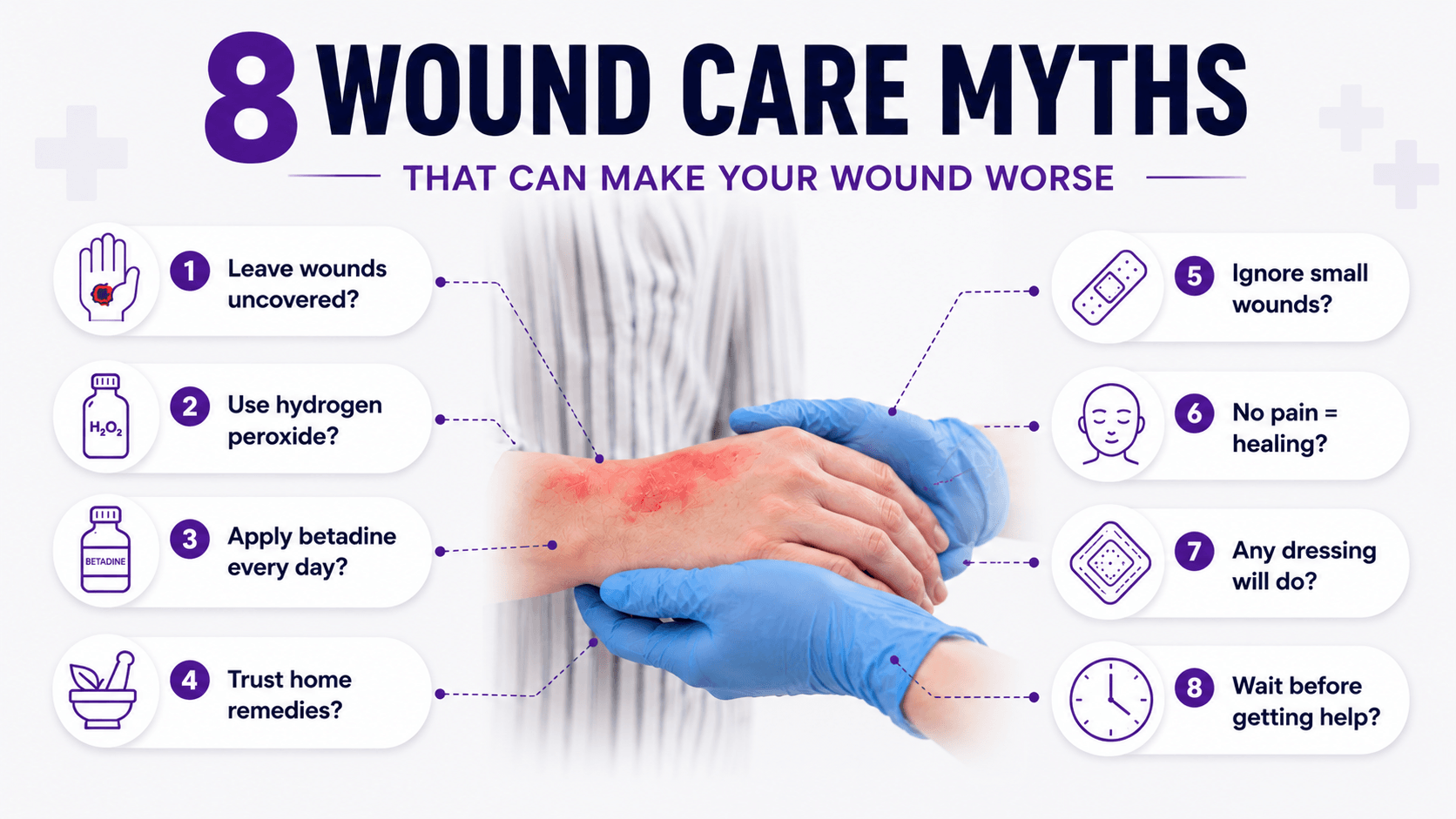
Let’s look at some of the most common wound care myths and what our nurses recommend instead.
Quick Summary
| Common Myth | What Our Nurses Recommend |
|---|---|
| Leave wounds open to “breathe” | Keep most wounds clean and appropriately covered. |
| Hydrogen peroxide is the best disinfectant | Clean with sterile saline or clean running water unless advised otherwise. |
| Betadine should be used every day | Only use antiseptics when clinically indicated. |
| Small wounds will heal on their own | Monitor healing and seek advice if there are signs of infection or delayed healing. |
| Home remedies always work | Avoid applying toothpaste, turmeric, oils or other unverified remedies to open wounds. |
| All dressings are the same | Different wounds require different dressing types. |
Myth 1: Leaving a Wound Open Helps It Heal Faster
This is one of the most common myths our nurses hear during home wound dressing visits.
Many people believe a wound needs to “breathe” to heal. In reality, modern wound care follows the principle of moist wound healing, where an appropriate dressing helps protect the wound while maintaining an environment that supports new tissue growth.
Leaving a wound exposed can increase the risk of dirt and bacteria entering the wound, while repeated drying and scab formation may slow healing.
Our nurses recommend: Keep the wound clean, protected with a suitable dressing, and change it according to your healthcare professional’s advice rather than removing it unnecessarily.
Myth 2: Hydrogen Peroxide Is the Best Way to Clean Every Wound
Hydrogen peroxide is well known because it bubbles when applied, leading many people to think it is effectively killing germs.
However, for routine wound care, hydrogen peroxide may also damage healthy cells involved in the healing process. Current wound care guidance generally recommends cleaning most wounds with sterile saline or clean running water, unless a healthcare professional advises otherwise.
Our nurses recommend: Avoid using strong antiseptics or disinfectants on every wound without professional advice. The safest cleaning solution depends on the wound type and your overall medical condition.
Myth 3: Betadine Should Be Applied Every Day
Betadine (povidone-iodine) is an effective antiseptic and has an important role in wound management. However, that does not mean every wound needs Betadine every day.
Different wounds require different treatment plans. Some wounds benefit from antiseptics during certain stages, while others heal better with moisture-retentive dressings and regular monitoring.
Using antiseptics unnecessarily may not improve healing and should not replace proper wound assessment.
Our nurses recommend: Use Betadine only when clinically appropriate and follow the advice of your healthcare provider rather than applying it routinely to every wound.
Myth 4: Traditional Remedies Always Help Wounds Heal Faster
Home remedies such as turmeric powder, toothpaste, coffee powder, oils, or minyak gamat are still commonly used in some households.
While these remedies are often shared with good intentions, applying non-sterile substances directly onto an open wound may increase contamination, make wound assessment more difficult, and potentially delay healing.
This does not mean traditional remedies have no place in general wellness, but open wounds require clean, evidence-based care.
Our nurses recommend: Avoid applying household remedies directly to open wounds. If you are unsure which dressing or treatment is suitable, seek professional advice before trying alternative methods.
Why Some Wounds Need Extra Attention
Not every wound heals at the same pace. While many minor cuts heal with basic first aid, certain wounds require closer monitoring and professional care.
At Backliners, our registered nurses assess not only the wound itself but also factors such as your medical history, circulation, mobility, nutrition, and overall healing progress. These factors help determine the most appropriate wound care approach.
| Wound Type | What Our Nurses Pay Attention To |
|---|---|
| Surgical wound | Incision edges, redness, drainage and signs of infection |
| Diabetic foot wound | Blood circulation, pressure points and blood sugar control |
| Pressure injury | Pressure relief, wound depth and nutritional status |
| Skin tear | Fragile surrounding skin and gentle dressing removal |
| Chronic wound | Healing progress, moisture balance and bacterial burden |
Myth 5: Small Wounds Don't Need Medical Attention
A small cut or blister may not seem like a cause for concern, but not all wounds heal normally.
For healthy individuals, minor wounds often improve with basic first aid. However, people with diabetes, poor circulation, weakened immune systems, or limited mobility have a higher risk of delayed healing and infection. What starts as a small wound can gradually worsen if left untreated.
This is especially true for diabetic foot wounds, which may go unnoticed because of reduced sensation in the feet. By the time pain or obvious symptoms appear, the wound may already be infected.
Our nurses recommend: Monitor every wound closely. If it becomes more painful, swollen, develops discharge, or does not show signs of improvement within 48 to 72 hours, seek professional assessment as soon as possible.
Myth 6: All Wound Dressings Are the Same
Many people think any gauze or dressing will do the job. In reality, wound dressings are selected based on the wound’s condition, location, and stage of healing.
For example, a surgical wound, pressure injury, diabetic foot ulcer, and skin tear often require different dressing materials and treatment approaches. Using the wrong dressing may cause the wound to become too dry, too wet, or more vulnerable to infection.
During every home visit, our registered nurses assess the wound before deciding whether the existing dressing remains appropriate or if it should be changed.
Our nurses recommend: Avoid choosing dressings based solely on convenience or price. Using the right dressing can make a significant difference to healing.
Myth 7: If the Wound Doesn't Hurt, It's Healing Well
Pain is only one indicator of a wound’s condition.
Some patients, especially those with diabetes, may have reduced sensation (neuropathy) and feel little or no pain even when a wound is worsening. Others may have wounds hidden under dressings or on pressure areas that are difficult to inspect.
Instead of relying on pain alone, look for other signs such as:
- Increasing redness
- Swelling
- Pus or unusual discharge
- Unpleasant odour
- Blackened tissue
- Delayed healing
Our nurses recommend: Check the wound regularly, even if it feels comfortable. If you’re unsure whether it’s healing properly, arrange a professional wound assessment instead of waiting for pain to develop.
Myth 8: It's Better to Wait Until the Wound Gets Worse Before Seeking Help
Some people delay seeking treatment because they hope the wound will heal on its own.
Unfortunately, delaying care often allows infection or tissue damage to progress, making treatment more complicated than if it had been addressed earlier.
Studies have shown that diabetic foot ulcers are a major cause of lower limb amputations worldwide. Early wound assessment, appropriate dressing, and timely intervention can significantly reduce the risk of complications.
Our nurses recommend: Don’t wait until the wound becomes severe. Early assessment often means simpler treatment, fewer complications, and a better chance of healing. For patients with limited mobility or those recovering from surgery, receiving professional wound care at home may help avoid unnecessary travel while ensuring wounds are monitored regularly.
Read Also: When Is Home Wound Care a Better Choice Than Clinic Visits?
Why Some Wounds Need Extra Attention
Not every wound heals at the same pace. While many minor cuts heal with basic first aid, certain wounds require closer monitoring and professional care.
At Backliners, our registered nurses assess not only the wound itself but also factors such as your medical history, circulation, mobility, nutrition, and overall healing progress. These factors help determine the most appropriate wound care approach.
| Wound Type | What Our Nurses Pay Attention To |
|---|---|
| Surgical wound | Incision edges, redness, drainage and signs of infection |
| Diabetic foot wound | Blood circulation, pressure points and blood sugar control |
| Pressure injury | Pressure relief, wound depth and nutritional status |
| Skin tear | Fragile surrounding skin and gentle dressing removal |
| Chronic wound | Healing progress, moisture balance and bacterial burden |
Simple Wound Care Tips Our Nurses Recommend
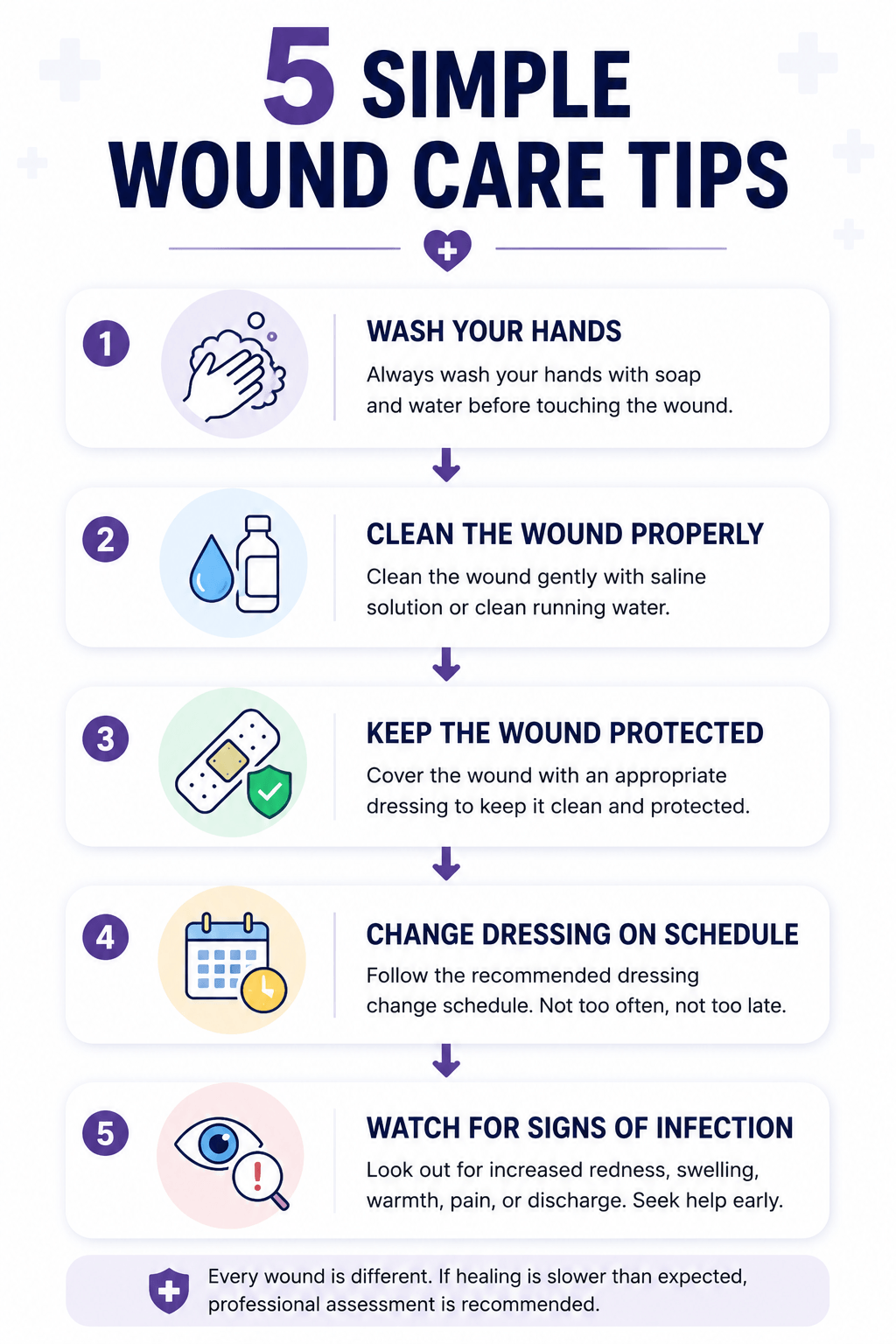
If you’re caring for a wound at home, these simple practices can help support healing.
| Do | Avoid |
|---|---|
| Wash your hands before touching the wound | Touching the wound with unclean hands |
| Clean the wound with saline or clean running water | Using hydrogen peroxide or harsh antiseptics routinely |
| Keep the wound protected with an appropriate dressing | Leaving the wound exposed unnecessarily |
| Follow the recommended dressing change schedule | Changing dressings too frequently or too late |
| Watch for signs of infection | Ignoring redness, swelling or discharge |
Remember that every wound is different. If healing is slower than expected, professional assessment is recommended.
When Should You Seek Professional Wound Care?
Contact a healthcare professional if you notice any of the following:
- The wound is becoming larger instead of smaller.
- Redness or swelling continues to spread.
- Yellow, green, or foul-smelling discharge develops.
- You have a fever or feel generally unwell.
- The wound has not improved after several days despite proper care.
- The wound is on the foot of someone with diabetes.
The wound is caused by surgery, prolonged pressure, or poor circulation.
Early intervention can often prevent more serious complications and support a smoother recovery.
Frequently Asked Questions
For most wounds, keeping them clean and covered with an appropriate dressing helps protect the wound from bacteria while maintaining an environment that supports healing. Leaving a wound uncovered is generally not recommended unless advised by a healthcare professional.
For most minor wounds, clean running water or sterile saline is usually sufficient. Avoid routinely using harsh antiseptics such as hydrogen peroxide unless recommended by a healthcare professional.
Not always. Betadine has an important role in wound care but is not suitable for every wound or every stage of healing. Our nurses recommend using antiseptics only when clinically indicated.
A healing wound usually becomes smaller over time, with less redness, swelling, and drainage. If the wound becomes larger, develops pus, has an unpleasant smell, or shows no improvement after several days, seek professional assessment.
Seek medical attention if the wound becomes increasingly painful, swollen, develops spreading redness, produces pus, has a foul odour, or if you have diabetes and the wound is on your foot. Early assessment can help prevent complications.
Some diabetic wounds can be managed at home with appropriate professional wound care and regular monitoring. However, every diabetic foot wound should be assessed early because diabetes increases the risk of infection and delayed healing.
It depends on the type of wound, the dressing used, and the amount of drainage. Some dressings require daily changes, while others may remain in place for several days. Follow your healthcare provider’s advice rather than changing dressings unnecessarily.
Avoid applying toothpaste, turmeric, coffee powder, oils such as minyak gamat, alcohol, or other household remedies directly to an open wound unless specifically advised by a healthcare professional. These substances may increase contamination or delay healing.
Not usually. Modern wound care supports a clean, moist healing environment rather than allowing wounds to dry out. Appropriate dressings help protect the wound while supporting the body’s natural healing process.
Some simple wounds can be safely managed at home if you have received proper instructions. However, surgical wounds, diabetic foot ulcers, pressure injuries, and wounds showing signs of infection should ideally be assessed and dressed by a qualified healthcare professional.
Yes. Backliners provides home wound dressing services by registered nurses for patients recovering from surgery, managing diabetic wounds, pressure injuries, chronic wounds, and other conditions that require ongoing wound care. Home visits are particularly helpful for elderly patients, individuals with limited mobility, and those who prefer receiving professional care in the comfort of their own home.
Professional Wound Care at Home
Proper wound care is not just about changing a dressing. It involves understanding the cause of the wound, selecting appropriate dressings, monitoring healing progress, and recognising early signs of complications.
At Backliners, our registered nurses provide personalised home wound care based on each patient’s condition. Whether you’re recovering from surgery, caring for a loved one with a pressure injury, or managing a diabetic foot wound, we aim to deliver professional wound care in the comfort of your home.
Explore our related services and guides:
- Home Wound Dressing Service
- Diabetic Wound Care
- Pressure Injury (Bedsore) Care
- Post-Surgical Wound Care
- Nutrition for Wound Healing
If you’re unsure whether a wound is healing normally, it’s always safer to have it assessed early rather than waiting for complications to develop.

Disclaimer Statement:
We hope you find this article helpful and informative. The content provided is intended for general informational purposes only and should not be considered medical advice, diagnosis, or treatment. For specific medical concerns, including wound care needs, always consult a qualified healthcare professional. Backliners specializes in expert wound care services and is dedicated to providing personalized care to support your health and recovery in the comfort of your home.