
Wound healing is a natural process, but it does not follow the same timeline for everyone. While some wounds may heal within a few days, others can take weeks or even months depending on the severity, location, and how well the wound is managed.
Understanding how long healing takes, what influences it can help you take better care of your wound and avoid unnecessary complications. Whether you are dealing with a minor cut or a post-surgical wound, proper wound care plays a key role in recovery.
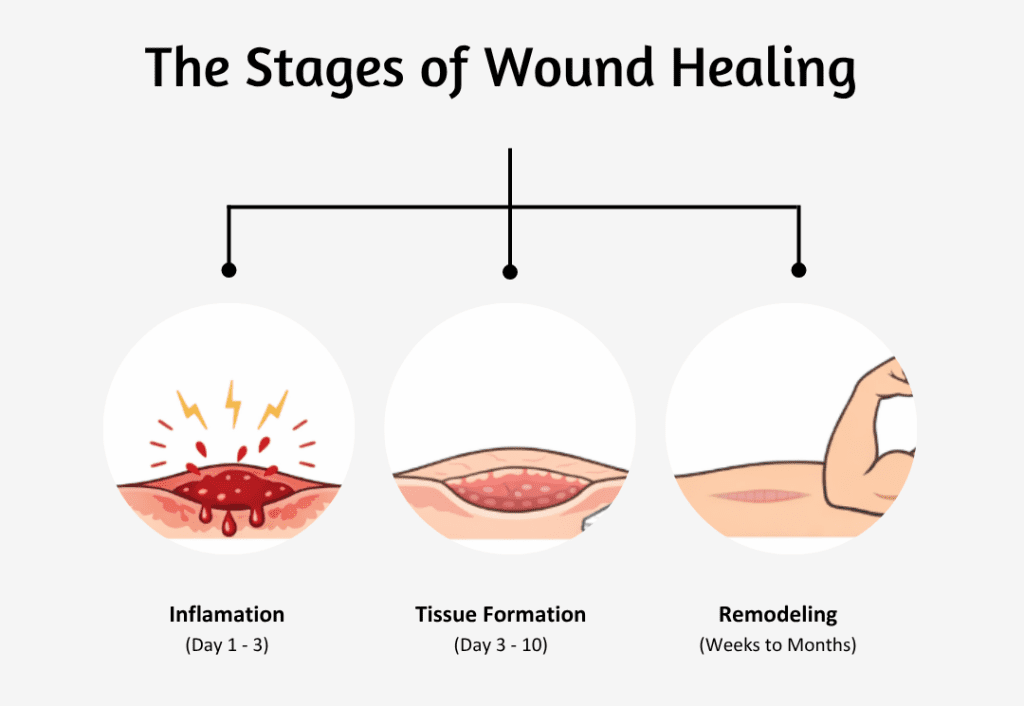
The Stages of Wound Healing Explained
Wound healing happens in a structured process, even if you do not notice it happening. Each stage prepares the wound for the next phase of recovery
Stage 1: Inflammation (Day 1–3)
This is the body’s immediate response to injury. Blood clotting occurs to stop bleeding, and the immune system works to prevent infection. Redness, warmth, and slight swelling are normal during this stage.
Stage 2: Tissue Formation (Day 3–10)
New tissue begins to form, helping close the wound. You may notice the wound shrinking as new skin develops. At this stage, proper wound dressing (cuci luka) is important to protect the wound and support healing.
Stage 3: Remodeling (Weeks to Months)
The wound strengthens and the skin continues to repair itself. Scarring may occur, and the area gradually regains strength over time.
How Long Different Wounds Typically Take to Heal
Not all wounds require the same amount of time to heal. The type of wound plays a big role in determining recovery duration.
| Type of Wound | Estimated Healing Time |
|---|---|
| Minor cuts and abrasions | 3–7 days |
| Deep cuts or stitched wounds | 1–3 weeks |
| Surgical wounds | 2–4 weeks |
| Burns (mild to moderate) | 1–3 weeks |
| Chronic wounds (diabetic, pressure sores) | Several weeks to months |
These timelines are general estimates. Healing can be faster or slower depending on how well the wound is managed.
Key Factors That Affect Wound Healing Time
Several factors influence how quickly or slowly a wound heals. These can be grouped into internal (body-related) and external (care-related) factors.
Internal Factors
These are related to your overall health and body condition:
- Age and general health condition
- Presence of chronic illnesses such as diabetes
- Blood circulation and oxygen supply
- Immune system strength
External Factors
These are related to how the wound is treated:
- Cleanliness and hygiene of the wound
- Proper wound dressing techniques
- Frequency of dressing changes
- Exposure to pressure, friction, or moisture
Both internal and external factors work together, which is why proper care is important at every stage.
What Helps Speed Up Wound Healing
Certain practices can support faster and safer recovery when done consistently.
Key habits that promote healing:
- Keeping the wound clean and properly dressed
- Following a consistent wound care routine
- Eating a balanced diet rich in protein and nutrients
- Staying hydrated
- Avoiding unnecessary pressure on the wound
Small actions done consistently can make a noticeable difference in healing progress.
What Can Delay or Complicate Healing
On the other hand, poor wound management or underlying conditions can slow down recovery.
Common causes of delayed healing:
- Infection due to poor hygiene
- Incorrect or inconsistent dressing
- High blood sugar levels (for diabetic patients)
- Poor nutrition or dehydration
- Repeated irritation or pressure on the wound
If these factors are not addressed early, they can lead to prolonged healing or complications.
Signs Your Wound Is Healing Properly
Monitoring your wound regularly helps you understand whether healing is progressing as expected.
Positive signs to look for:
- Gradual reduction in pain and swelling
- Formation of new tissue
- Decrease in wound size
- No unusual discharge or odor
Warning signs to watch out for:
- Increasing redness or swelling
- Persistent or worsening pain
- Pus or foul-smelling discharge
- Fever or feeling unwell
Recognising these signs early allows you to take action before the condition worsens.
When to Consider Professional Wound Care
Some wounds require more than basic home care. If healing is slow or complications arise, professional support becomes important.
You should consider professional home wound care if:
- The wound is not improving after several days
- Dressing needs to be changed frequently
- The wound is deep, large, or post-surgical
- You have underlying conditions affecting healing
Professional care ensures the wound is treated correctly and monitored consistently.
The Role of Consistent Home Wound Care
Consistency is one of the most overlooked factors in wound healing. Even a well-treated wound can slow down if care is not maintained regularly.
With structured home wound care services, patients can receive:
- Proper wound cleaning and dressing
- Regular monitoring of healing progress
- Adjustments to treatment based on condition
- Reduced need for travel to clinics or hospitals
This is especially beneficial for elderly patients or individuals with mobility challenges.
How Professional Home-Based Wound Care Is Delivered by Backliners
Backliners provides medically guided wound care services at home for patients who require consistent attention and proper treatment outside of a clinical setting. The approach is built around safety, structured care, and ensuring wounds are managed correctly throughout the healing process.
Every visit is carried out by trained healthcare personnel who follow proper clinical procedures, from initial wound assessment to cleaning, dressing, and monitoring of healing progress. The goal is to ensure treatment is done correctly and adjusted based on the condition of the wound.
Services include:
- Assessment and management of different wound types
- Sterile wound cleaning and dressing (cuci luka)
- Care for surgical wounds and recovery cases
- Support for chronic and slow-healing wounds
- Scheduled follow-up visits for progress tracking
Care is delivered in a structured manner, with proper documentation and ongoing evaluation to ensure continuity and safety in every stage of recovery.
To make the process easier for patients and families, communication is kept clear and accessible, helping them understand instructions and care plans without confusion.
Final Thoughts
Wound healing time varies depending on the type of wound, overall health, and how well the wound is managed. While some wounds heal quickly, others require more time, attention, and consistent care.
By understanding the healing process and maintaining proper wound care, you can support faster recovery, reduce complications, and ensure the wound heals as safely as possible.
Frequently Asked Questions
The healing time depends on the type and severity of the wound. Minor cuts may heal within a few days, while deeper, surgical, or chronic wounds can take weeks or even months. Proper wound care plays an important role in speeding up recovery.
Healing can be delayed by infection, poor hygiene, underlying conditions like diabetes, poor nutrition, and improper wound dressing. Repeated pressure or friction on the wound can also affect recovery time.
Signs of proper healing include reduced pain, less swelling, and gradual closure of the wound. If there is increasing redness, unusual discharge, or worsening pain, it may indicate a problem.
You should seek professional help if the wound is not improving after a few days, shows signs of infection, requires frequent dressing changes, or is deep or post-surgical. Proper care helps prevent complications.
Yes, using the right wound dressing helps maintain a proper healing environment, manage moisture, and protect against infection. Different wounds require different types of dressings depending on their condition and stage.
Disclaimer Statement:
We hope you find this article helpful and informative. The content provided is intended for general informational purposes only and should not be considered medical advice, diagnosis, or treatment. For specific medical concerns, including wound care needs, always consult a qualified healthcare professional. Backliners specializes in expert wound care services and is dedicated to providing personalized care to support your health and recovery in the comfort of your home.

